Welcome to the Active Passport!

Macau — The Sleeping Giant of Glitter and History
Discover Macau — the fascinating mix of Chinese and Portuguese culture, world-class casinos, rich history, and incredible city views on a perfect day trip.
CHINA
10/5/2025


I went to Macau last October, during the same trip as my visits to Hong Kong and Indonesia. I spent a full day there — taking the ferry from Hong Kong, which only took about one hour, and returning by bus in the evening.
A Short History of Macau
Macau has one of the most fascinating and unique histories in all of Asia — a small territory with an incredible blend of East and West. It was originally a quiet fishing village under Chinese control, part of the Guangdong province, until the mid-1500s when Portuguese traders arrived. In 1557, the Ming Dynasty allowed the Portuguese to settle in Macau as a reward for helping fight off pirates, making it the first European settlement in East Asia.
From there, Macau quickly became a major trading port, connecting China with Japan, India, and Europe. For centuries, it was the gateway between East and West, with ships carrying silk, porcelain, spices, and gold passing through its busy harbor. The city flourished as a cultural and commercial hub, mixing Chinese traditions with European architecture, religion, and cuisine. You can still see this fusion today — pastel-colored churches stand beside Chinese temples, and street signs are written in both Chinese and Portuguese.
In 1887, Portugal officially declared Macau a colony, and it remained under Portuguese administration for over 400 years — even longer than Hong Kong’s British rule. However, in 1999, Macau was handed back to China and became a Special Administrative Region (SAR), just like Hong Kong. That means Macau has its own legal system, currency, and a high degree of autonomy while still being part of China.
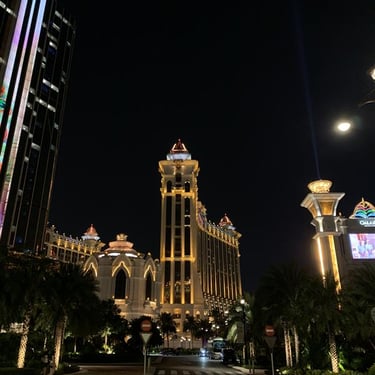
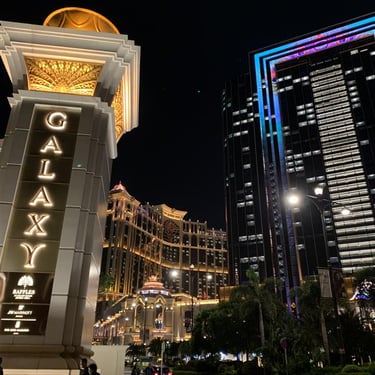
What makes Macau especially famous today is its casino industry. Gambling was legalized in the 1850s under Portuguese rule, but it truly exploded after 2002 when foreign companies were allowed to invest. Today, Macau is known as the “Las Vegas of the East,” though it actually generates far more gambling revenue than Las Vegas — in some years up to six times more. The Cotai Strip, built on reclaimed land between Taipa and Coloane islands, is home to gigantic resorts like The Venetian, Galaxy, and City of Dreams, drawing millions of tourists every year.
Despite the bright casino lights, Macau still holds onto its history — cobblestone streets, colonial squares, ancient temples, and fortress walls that remind you of its rich cultural past. It’s this rare mix of old-world charm and futuristic luxury that makes Macau unlike any other place in the world.The city’s economy depends heavily on tourism and gambling, which accounts for roughly 80% of government revenue.
I first heard about Macau when I watched the movie Now You See Me 2. I was around 13 or 14 back then, and didn’t think much of it. But when I got older, I looked it up and thought — this place looks unreal. Everyone knows Las Vegas, but Macau? It’s a sleeping giant that most people in the West have never even heard of.
🏙️ Exploring the Historic Side of Macau
I arrived in the morning at the Macau Peninsula, which is the northern, more historical part of the city. Macau consists of four main areas — the Peninsula, Taipa, Coloane, and the Cotai Strip, which connects Taipa and Coloane and is home to the modern casino resorts.
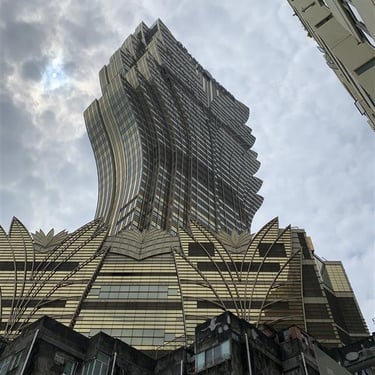
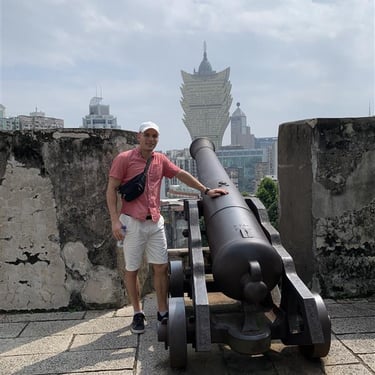
I spent the first half of the day exploring the old, cultural side of Macau — it’s best to save the casino area for the evening. But even on the mainland side, you can’t miss the Casino Lisboa. It’s absolutely enormous and shaped like a lotus flower — it’s the oldest casino in Macau and a true icon of the city’s skyline.
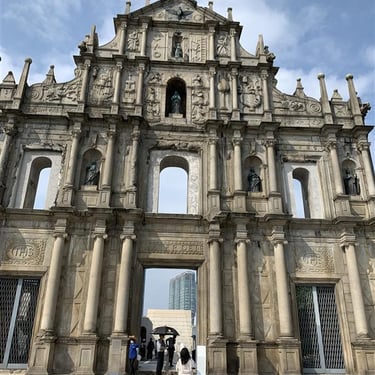
I wandered through the district of Cathedral (Sé) — a fascinating mix of East and West. The Sé Cathedral, originally built in the 16th century, is one of the most important Catholic buildings in Asia and stands as a reminder of Macau’s colonial heritage. It felt surreal to see Portuguese signs and European-style churches in the middle of China.
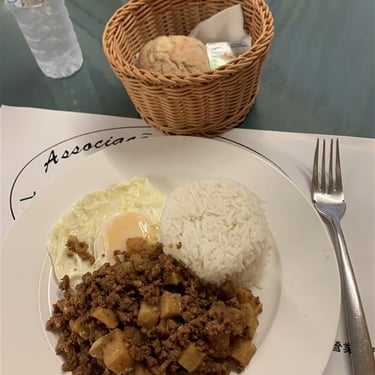
For lunch, I tried a typical local dish called Minchi, which is a delicious comfort food made of minced meat, potatoes, onions, soy sauce, and topped with a fried egg. It’s not the most photogenic meal, but it tastes amazing.
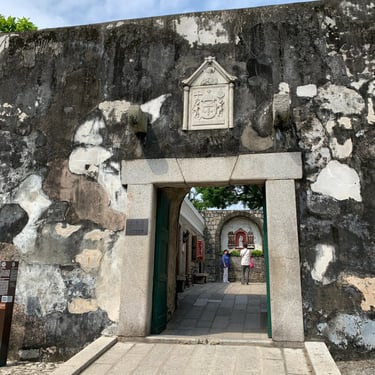
After lunch, I headed toward Santo António, another historic neighborhood famous for its UNESCO World Heritage churches. One highlight was the Mount Fortress, built in the early 17th century by the Jesuits to protect Macau from invasions. It also houses the Macao Museum, which gives a great overview of the city’s cultural blend — Chinese traditions, Portuguese influence, and modern-day prosperity. I really enjoyed this spot, not only for its history but also for the panoramic views over the city.
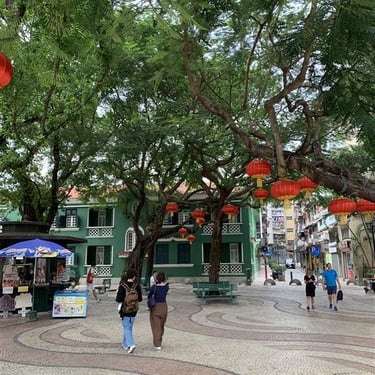
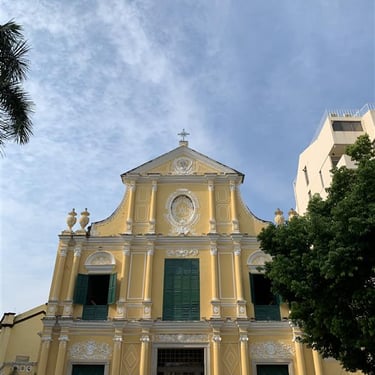
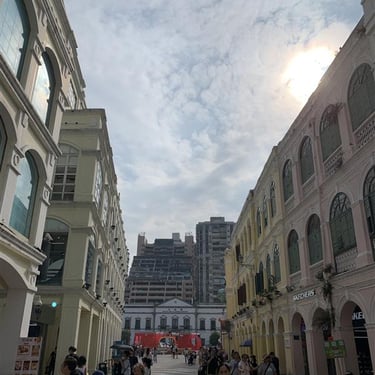
Before leaving the old town, I also stopped by St. Lawrence Church and the beautiful nearby town square, lined with pastel-colored buildings and cobblestone streets. The architecture here is absolutely charming — you really feel like you’ve been transported to southern Europe.
🏗️ From History to High Stakes — The Modern Face of Macau
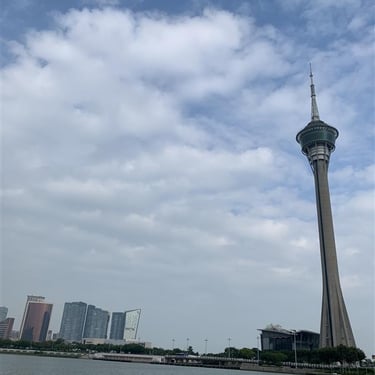
In the afternoon, I took the bus from Praça de Ferreira do Amaral toward Taipa. On the way, I passed the Macau Tower, which is the tallest building in the city at 338 meters. It’s not just for views — the tower is famous for having one of the highest commercial bungee jumps in the world!
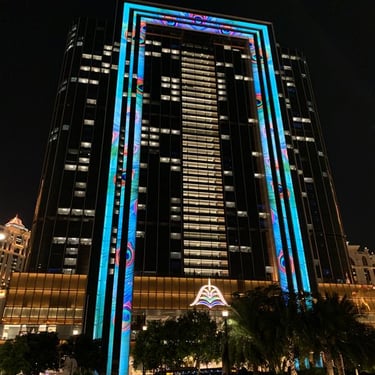
When I arrived in Taipa, it was time to visit the Cotai Strip — home to the biggest and most luxurious casinos and hotels on Earth. And wow… it did not disappoint. The scale and opulence of these buildings are jaw-dropping.
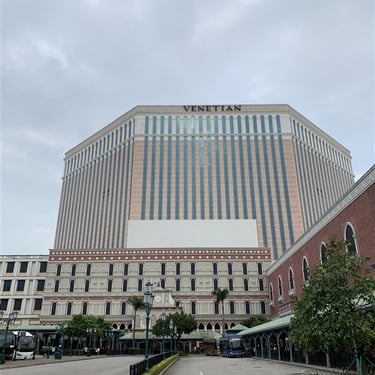
The main reason I was there? To see The Venetian Macau, the largest casino in the world. But first, I grabbed a meal at Five Guys — tasty but definitely overpriced (a recurring theme in casino cities 😅). I felt I had to earn my money back somehow, so I headed to the gaming floor.
Walking into The Venetian felt like stepping into another universe. The resort is massive — with 3,000 suites, 1.2 million square feet (about 111,000 m²) of convention space, 1.6 million square feet (about 149,000 m²) of retail, and a 550,000 square foot (about 51,000 m²) casino floor with 3,400 slot machines and 800 gambling tables. It even has a 15,000-seat arena for concerts and sports events.
They even offer free Coca-Cola and Red Bull — a nice touch. I didn’t gamble much, just around €60 for fun, but managed to double it on blackjack, which felt great. Meanwhile, people around me were casually walking around with chips worth hundreds of thousands of dollars. What struck me was how casually they dressed — t-shirts, flip-flops, nothing fancy. That’s when you know they’re really rich.
Looking up, I noticed cameras everywhere — literally every half meter of ceiling had one. Security in Macau casinos is on another level.
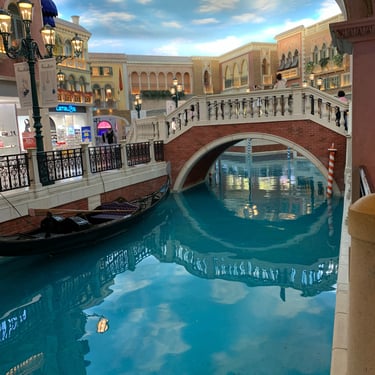
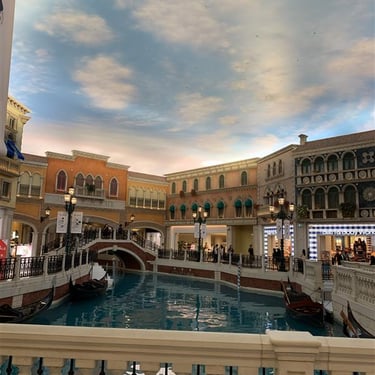
After cashing out my huge win, I wandered through the Venetian’s indoor replica of Venice — complete with canals, bridges, gondolas, and painted blue skies. You can actually take a gondola ride inside the building!
🌆 Ending the Night
After a full day of exploring both sides of Macau — from ancient churches to futuristic casinos — I caught the evening bus back to Hong Kong. It was the perfect day trip, and I couldn’t stop thinking about how unique this city is.
Macau offers something truly special: a fascinating blend of Chinese culture, Portuguese heritage, and ultra-modern luxury. If you’re ever in Hong Kong or southern China, I can’t recommend enough to spend at least a day in Macau. It’s one of those places that surprises you at every turn — and you’ll leave feeling like you’ve visited three worlds in one day.