Welcome to the Active Passport!
Discovering Cambodia — History, Humanity & Unforgettable Encounters
Discover the real Cambodia — from the breathtaking Angkor Wat sunrise and Siem Reap’s floating villages to unforgettable local encounters and the deep history of Phnom Penh. This travel story dives into Cambodia’s colonial past, Pol Pot’s haunting legacy, and the kindness of its people. Perfect for history lovers, adventure seekers, and those who crave more than just beaches.
10/16/2025


Cambodia had been on my radar for a long time. One reason we chose to go there was because my travel buddy and I are a bit of history nerds. Cambodia’s colonial past and its devastating Pol Pot era have always fascinated me — partly because it’s not something we learn much about in Swedish schools. Another reason was curiosity. I barely knew anyone who had ever been to Cambodia, and that made it even more exciting.
I’ve always loved exploring places that feel “undiscovered.” Going to an all-inclusive on Mallorca doesn’t really entertain me anymore — I crave places with real stories, real people, and real emotions. So Cambodia was decided.
🇰🇭 A Country of History and Resilience
From 1863 to 1953, Cambodia was part of French Indochina, together with Vietnam and Laos. The French influence still lingers today — in architecture, food, and even some of the local customs. But not long after independence, the country fell into one of the darkest chapters in modern history.
Between 1975 and 1979, Pol Pot and the Khmer Rouge ruled Cambodia with horrifying brutality. Their goal was to create a communist agrarian utopia — but the result was one of history’s most devastating genocides. Around two million people — about 25% of the population — were killed through execution, starvation, and forced labor.
The scars from that era are still visible, yet so is the Cambodian spirit — strong, humble, and endlessly kind.
⚠️ The Unexpected Conflict
About two and a half weeks before our departure, while enjoying a lunch in Chongqing, China, we got news that made our stomachs drop — a new outbreak of conflict between Cambodia and Thailand.
The dispute centered around the Preah Vihear Temple, a centuries-old site along the border. This border had been drawn by the French during the colonial era, and both countries still claim it. The fighting had escalated, civilians were being displaced, and we seriously considered rerouting our trip.
After a few stressful days of calls with agencies and embassies, a ceasefire was announced. We decided to stick to the plan — and I’m forever grateful we did.
🛺 First Stop: Siem Reap
We landed in Siem Reap late in the evening and found a tuktuk driver to take us to our hostel — Bokre Angkor Hostel. It turned out to be clean, calm, and cheap, with a super friendly vibe.
What we didn’t realize was that tuktuks in Cambodia drive very slowly. What should’ve been a 30-minute trip turned into an hour and a half — but we just laughed it off. After all, that’s part of the adventure.
🏞️ The Floating Villages of Tonlé Sap
The next day, we rented scooters through the hostel and set out to explore. I highly recommend renting scooters in Siem Reap — the traffic isn’t chaotic, and it gives you full freedom to roam around.
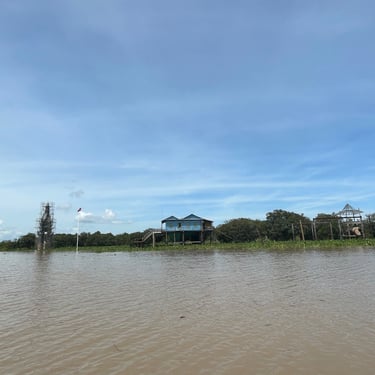
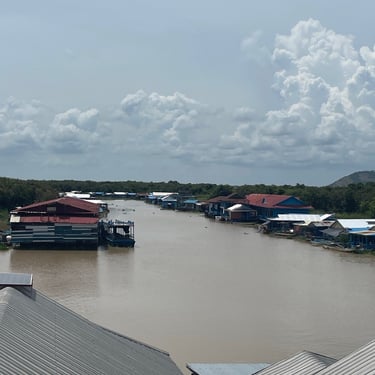
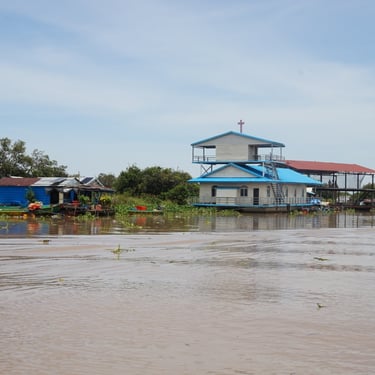
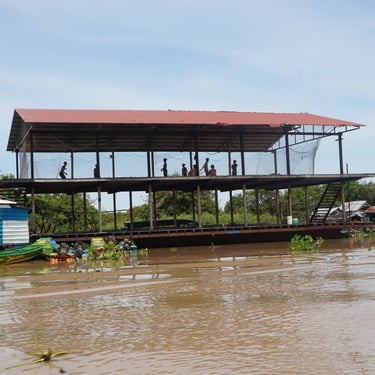
We visited Chong Kneas, one of several floating villages on Tonlé Sap, Southeast Asia’s largest freshwater lake. People there live their entire lives on boats — schools, churches, stores, and homes floating together in harmony. They move their houses several times a year as water levels change, living humble lives yet radiating so much happiness.
It was a deeply eye-opening experience. The children waved at us, shouting “hello!” with huge smiles. I’ll never forget that warmth.
If you’ve ever watched The Grand Tour (Season 4, Episode 1), where Jeremy Clarkson and his crew sail through these floating villages — that’s exactly where we were. And it’s just as fascinating in real life.
🛕 Angkor Wat — A World Wonder
You cannot visit Cambodia without visiting Angkor Wat — it would be like going to Beijing and skipping the Great Wall.
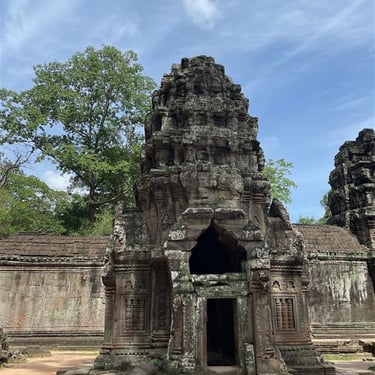
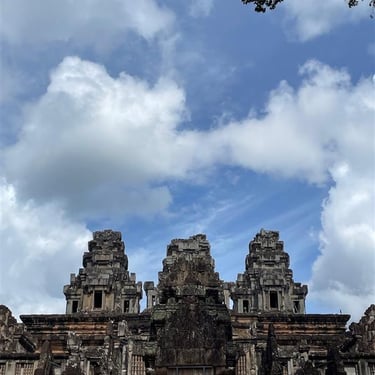
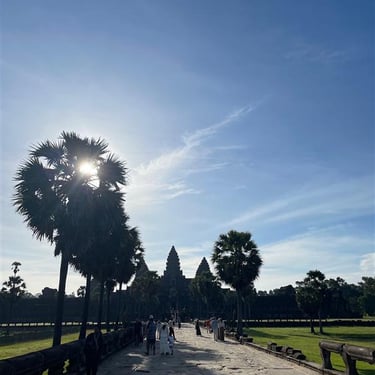
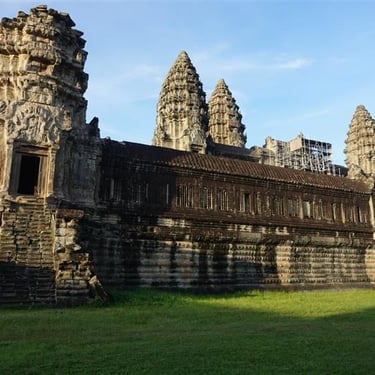
Built in the early 12th century by King Suryavarman II, Angkor Wat was originally a Hindu temple dedicated to Vishnu, before later becoming a Buddhist temple. It’s the largest religious monument in the world, and every stone tells a story.
We booked our tickets through the official site, Angkor Enterprise, for around €37, which included a tuktuk driver for the day. He picked us up at 5 AM so we could catch the sunrise over the main temple — an unforgettable sight that words can barely describe.
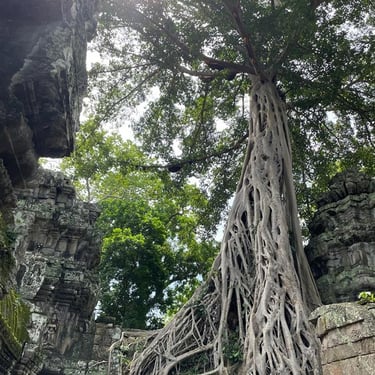
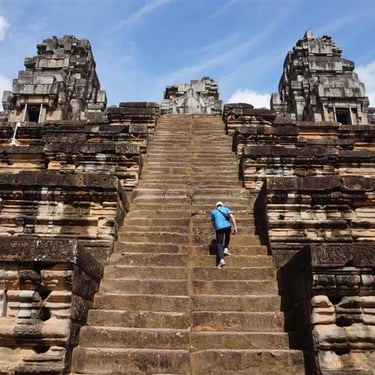
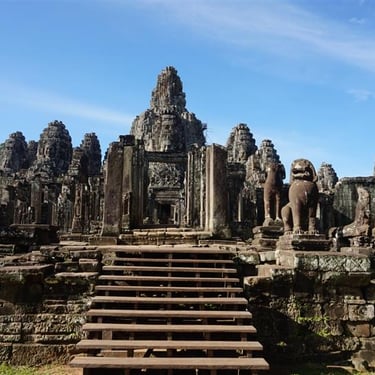
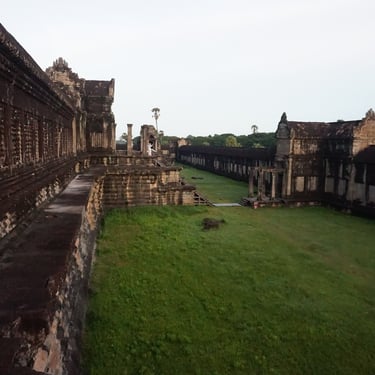
Walking through those ancient corridors, seeing the intricate carvings and the towering spires, I was completely in awe.
It gets very hot during the day, so wear comfortable clothes — but please, dress modestly. Too many tourists show up in tank tops and short shorts, completely ignoring the sacredness of the site. Respect goes a long way.
By the time we returned to Siem Reap in the afternoon, we were exhausted, sweaty, and completely overwhelmed by what we had just experienced — in the best possible way.
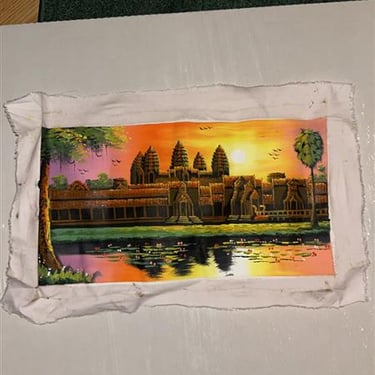
I bought a oil painting of Angkor Wat at the site
🚌 The Night Bus to Sihanoukville
Next up was Sihanoukville, a coastal city in southwestern Cambodia. Once a backpacker paradise, it’s now more commercialized due to massive Chinese investment — casinos and resorts everywhere — but still worth visiting, especially for Otres Beach or a trip to Koh Rong Island, which is absolutely stunning.
We took a 12-hour night bus booked through our hostel. It was… quite the experience. The bus looked like it could fall apart at any moment, motorcycles were being loaded underneath, and chickens roamed around the station. Inside, me and my (tall) friend shared one small pink-blanketed bed. Not ideal — but honestly, it was hilarious.
We somehow managed to sleep a bit, arrived early in the morning, and checked into Onderz Hostel, which was more like a resort — big pool, chill vibes, and amazing Pad Thai.
🎤 A Karaoke Night to Remember
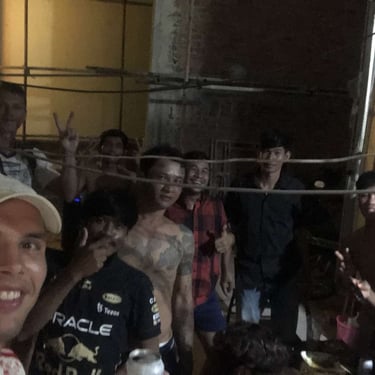
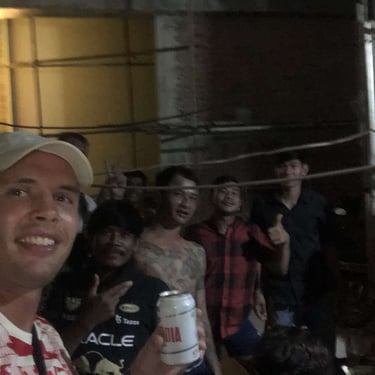
One night, after grabbing some snacks on our way back to the hostel, we passed a construction site where workers were drinking beer and singing karaoke. They saw us and waved us in. My friend hesitated, but I couldn’t resist — this could be fun.
It turned into one of the most memorable nights of my life.
They barely spoke English, but with Google Translate, beers, and music, we connected instantly. I sang ABBA songs in Swedish, they sang Cambodian hits, and everyone laughed and danced. It was pure joy — no filters, no expectations, just human connection.
Moments like that are why I travel. You can’t plan them. You just have to be open to them.
🏙️ Phnom Penh — The Heart of Cambodia
Our final stop was Phnom Penh, the capital. We stayed at Mad Monkey Hostel, and it was fantastic — full of energy, people, and social activities like beer pong tournaments and rooftop parties.
But Phnom Penh also carries Cambodia’s deepest pain.
We visited Tuol Sleng Genocide Museum (S-21) and the Killing Fields of Choeung Ek — places where the Khmer Rouge carried out their atrocities. About 20,000 prisoners passed through S-21; only a handful survived.
Walking through those sites was one of the most emotional experiences of my life. The preserved cells, torture tools, photographs, and skulls — they make it impossible to stay detached. I met one of the few survivors who now sits in the courtyard selling his book. I bought it and took a photo with him — a man who has endured more than most could ever imagine.
It’s a heartbreaking visit, but one that every traveler should make. You don’t leave the same person as when you entered.