Welcome to the Active Passport!

Beijing blew my mind — Great Wall, street food & ancient history.
Two weeks in China pt1: exploring Beijing’s Great Wall, Forbidden City, Lama Temple, and street food. History, fitness, culture, and unforgettable adventures.
CHINA
10/4/2025


Me and my friend had originally decided to visit Japan, but then we changed our minds. Japan is a more well-known tourist destination — a place you can always go. China, on the other hand, felt like a wildcard, more unknown, and in the end, choosing China was the best decision we could have made. I fell in love with the country. It’s the place I most want to re-visit — unexplainably amazing.
We spent one week in Beijing and one week in Chongqing (more on that in a separate post). Looking back, we probably should have added one or two more cities, but there are no regrets — it only gives me more incentive to return.
Our Stay in Beijing
We stayed at Happy Dragon Saga Hotel Beijing, and I cannot recommend this place enough. Located in the hutongs — the traditional narrow alleys of Beijing — it gave us an authentic and cultural vibe from day one. The hotel was super clean, the staff was incredibly kind, always helpful and smiling, and the service was 10/10.
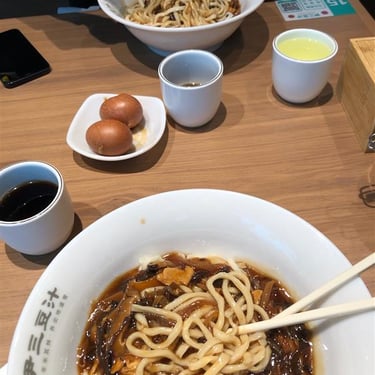
They also arranged trips for us to the Great Wall, Forbidden City, and Tiananmen Square at really good prices. The atmosphere of the hotel was friendly, with a cozy restaurant serving tasty food and cheap local beer. Just a short 5-minute walk away we also found an incredible little noodle spot (close to the Regent Hotel, look for a sign with “BBQ” and “noodles”). If you find it, order their beef noodle soup with some extra meat skewers — it was unforgettable.
The Great Wall of China
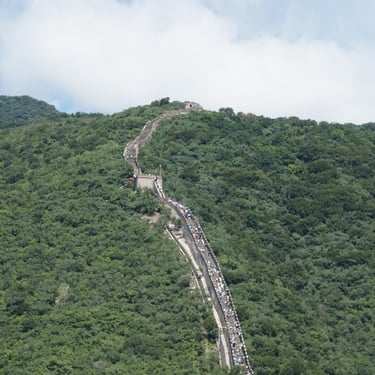
The Great Wall was the absolute highlight of Beijing, maybe even of the entire trip. We joined a bus tour arranged by our hotel, which drove us nearly two hours out of the city to the Mutianyu section of the Wall, one of the best-preserved and less crowded areas compared to the more famous Badaling.
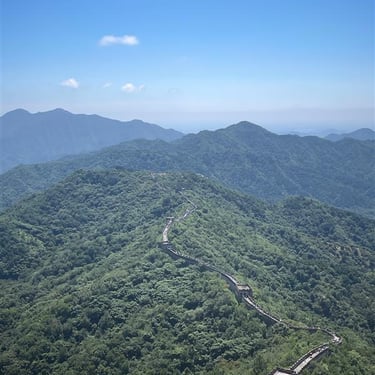
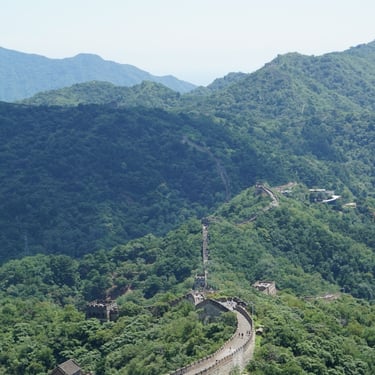
Being on the wall felt surreal — mighty, ancient, and majestic beyond words. I’d heard about it since I was a child, but nothing could prepare me for standing on those stones and looking out across the mountains. For a history nerd like me, it was like stepping back in time.
Mutianyu itself has a series of steep climbs and watchtowers, but it’s also slightly greener than other parts of the wall, with forests stretching all around. It gave us some of the best views I’ve ever seen in my life.
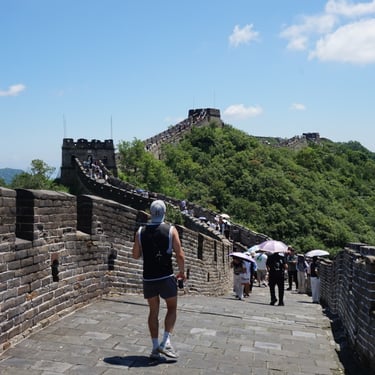
We visited in summer, under a scorching 35°C sun, and one thing really stood out — umbrellas everywhere. The majority of locals carried umbrellas, not for rain but for the sun. At times, walking up the narrow stairs felt like navigating an obstacle course of umbrellas, most of which were exactly at forehead level for us taller Westerners. It made for a few laughs (and near pokes in the eye), but it also showed us how differently people prepare for the heat.
A Short History of the Wall
The origins of the Great Wall go back as early as the 7th century BC, when various states in China built smaller walls to defend their territories. Later, during the Qin Dynasty (221–206 BC), Emperor Qin Shi Huang — the first emperor of a unified China — began connecting and expanding these walls as a defense against northern nomadic tribes, particularly the Mongols.
Most of what we see today, however, was built much later during the Ming Dynasty (1368–1644), when the threat from the Mongols and other steppe tribes was constant. The wall wasn’t just a physical barrier — it also served as a psychological one, symbolizing the separation between the agricultural Chinese civilization of the south and the nomadic horsemen of the north.
Over the centuries, the wall impacted trade, culture, and military strategy across all of Asia. It protected trade routes like the Silk Road and became one of the most ambitious engineering feats in human history. Standing on it, you don’t just see stones and bricks — you feel the weight of thousands of years of conflict, survival, and ambition.
Tour Experience
Our guide for the day was Kevin, and I have to give him a huge shoutout. He was a superstar — hilarious, passionate, and full of knowledge about Chinese history. He had that rare gift of making history come alive, not just through facts but through stories and humor. His excitement was contagious, and you could tell he genuinely loved sharing his culture with us.
After almost four hours of hiking along the wall, sweating under the blazing sun, we returned to the bus for an included lunch stop. It couldn’t have been better timed. Sitting down, having delicious Chinese food, and swapping stories with the other people on our tour was the perfect way to recharge. The meal gave us energy and also some new travel buddies to share laughs with. Honestly, if you book a tour to the Wall, make sure lunch is included — it’s worth it.
This whole day was easily a Top 3 travel memory of all time for me. Pictures and textbooks simply cannot capture how mighty and beautiful the Great Wall is — it has to be experienced.
We visited in summer, under a scorching 35°C sun, so if you go, make sure to bring:
Sunscreen (buy here at amazon)
Hat (buy here at amazon)
A refillable water bottle (drinks on the wall are overpriced) (buy here at amazon)
The stairs are steep in many places, but the best views are worth the climb. On the way down, you can even take a slide.
This was easily a Top 3 travel memory of all time for me. Pictures and textbooks simply cannot capture how mighty and beautiful the Great Wall is — you have to see it for yourself.
The Forbidden City & Tiananmen Square
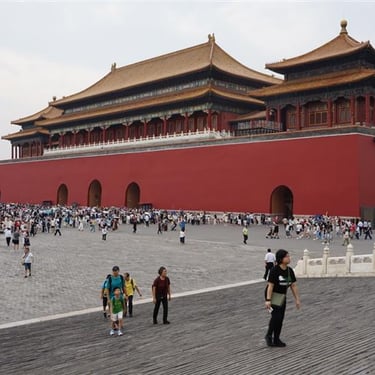
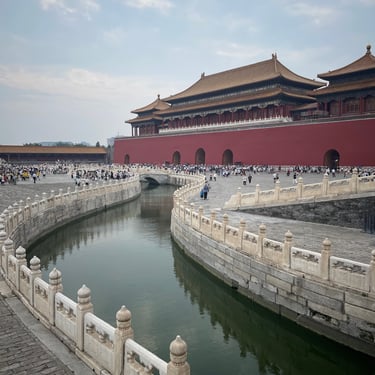
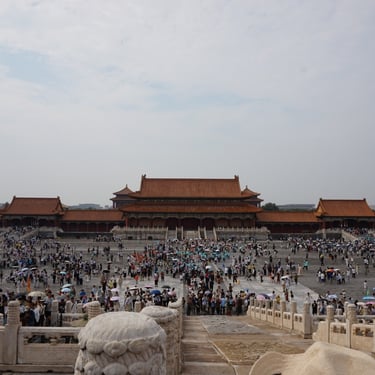
The Forbidden City was another must-see. Once home to China’s emperors for centuries, this massive palace complex feels endless. Beautiful golden roofs, red walls, and ancient courtyards stretch on and on, making you imagine life in the old dynasties. We booked our tickets online (around €100 for two with a guide included), and the tour lasted about 4 hours.
Be prepared: it’s crowded, hot in summer, and a lot of walking — but it’s worth every step. Even if you aren’t a history fan, the scale and beauty of the architecture will impress you.
Right next to it lies Tiananmen Square, one of the largest public squares in the world and a historic landmark. This is where Mao Zedong declared the founding of the People’s Republic of China in 1949, and it remains the symbolic heart of modern China. Surrounded by monumental buildings like the Great Hall of the People and Mao’s Mausoleum, it’s a place you cannot miss.
Best tip: visit the Forbidden City and Tiananmen Square together since they are directly connected. It gives you both the imperial past and the modern political core of China in one day.
Other Highlights in Beijing
Lama Temple – one of the most important Tibetan Buddhist temples, rich in culture and color.
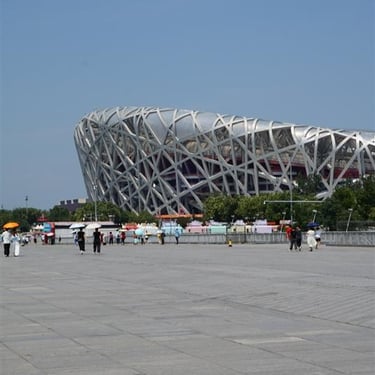
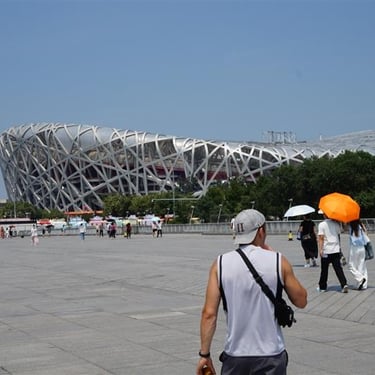
Bird’s Nest Stadium – the iconic arena from the 2008 Olympics. We even got to walk on the roof, which was incredible.
Ritan Park – a peaceful park where we worked out at the outdoor gym alongside impressively strong older locals. They even gave us a nod of approval when we did calisthenics — which felt amazing.
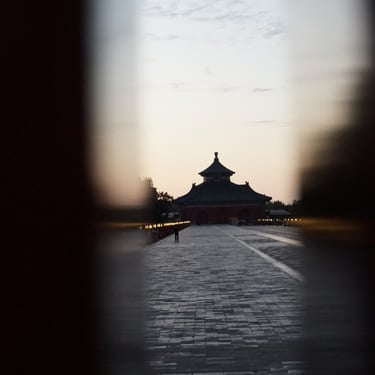
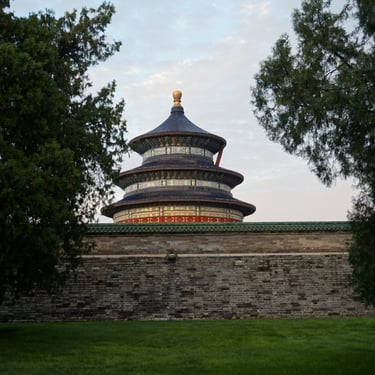
Temple of Heaven Park – especially beautiful in the evening, with its round temple rising against the sunset sky.
Food highlights included Kung Pao chicken (spicy, sweet, and crunchy with peanuts), beef noodle soups, and endless skewers.
A Fun Wangfujing Story
One evening on Wangfujing Street, Beijing’s buzzing shopping district, we had one of the most unexpected experiences of the trip. A man approached us, speaking perfect English — already rare in Beijing — and then, to our shock, he even spoke some Swedish, our native language!
He explained that he was an art teacher for international students and had taught Swedish students before. He invited us to his art exhibition nearby. At first, we were skeptical, but curiosity won. We followed him off the bright, crowded street, into a dim alley, down an elevator in what looked like a shady building. For a second, we thought this might be the end of our journey.
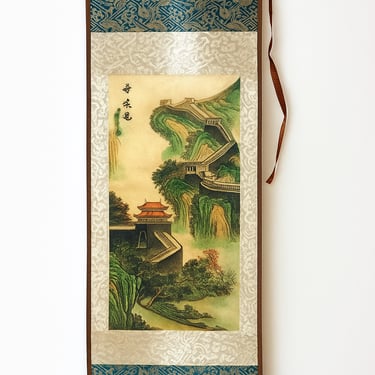
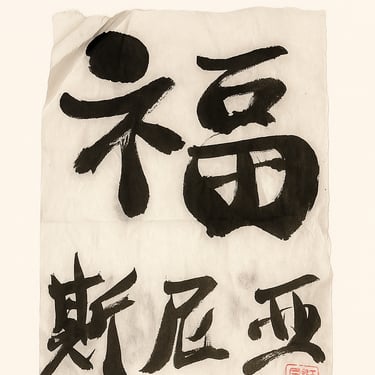
But to our surprise, it was real. Inside was a small exhibition showcasing traditional Chinese art. I ended up buying a scroll painting of the Great Wall, a tiny glass tiger painted from the inside (unbelievable craftsmanship), and he gifted us a paper with our names in Chinese calligraphy.
What started as a random encounter turned into one of my favorite memories of Beijing — proof that sometimes saying yes to the unexpected leads to the best stories.
Tips for Beijing
Download Alipay and WeChat – they cover everything from payments to bike rentals.
Use Didi taxi – insanely cheap and convenient.
Rent bikes – Beijing is bike-friendly and exploring this way is amazing.
Bring a power bank – you’ll need your phone a lot for maps and translation.(buy here at amazon)
Bring a universal adapter for charging.(buy here at amazon)
Don’t expect much English – a translate app is essential.
Final Thoughts
Beijing absolutely exceeded my expectations. Between the Great Wall, the Forbidden City, biking through hutongs, eating incredible food, and even stumbling into random adventures like the art exhibition, this city gave me some of my all-time favorite travel memories.
China might not be the most obvious tourist destination, but that’s exactly why I loved it. It’s authentic, surprising, and endlessly fascinating — and I cannot wait to go back.